
Exposi'Son


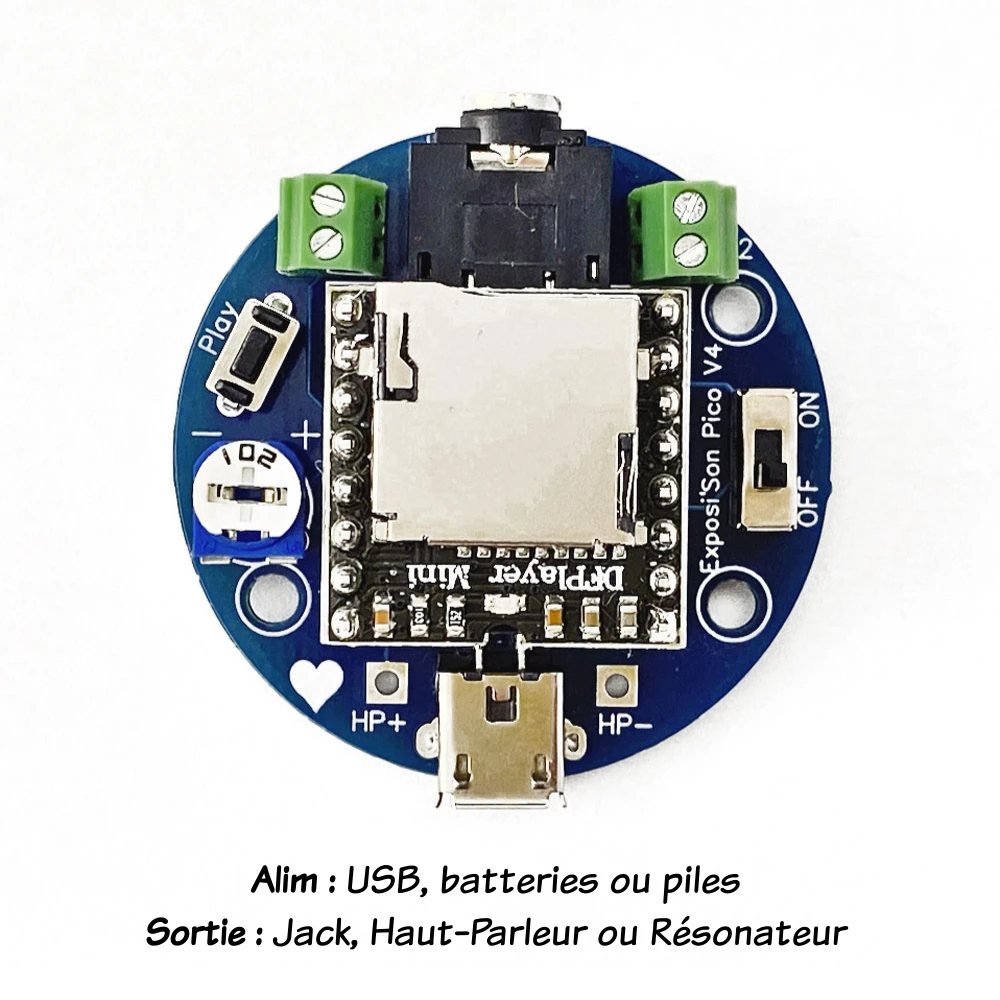
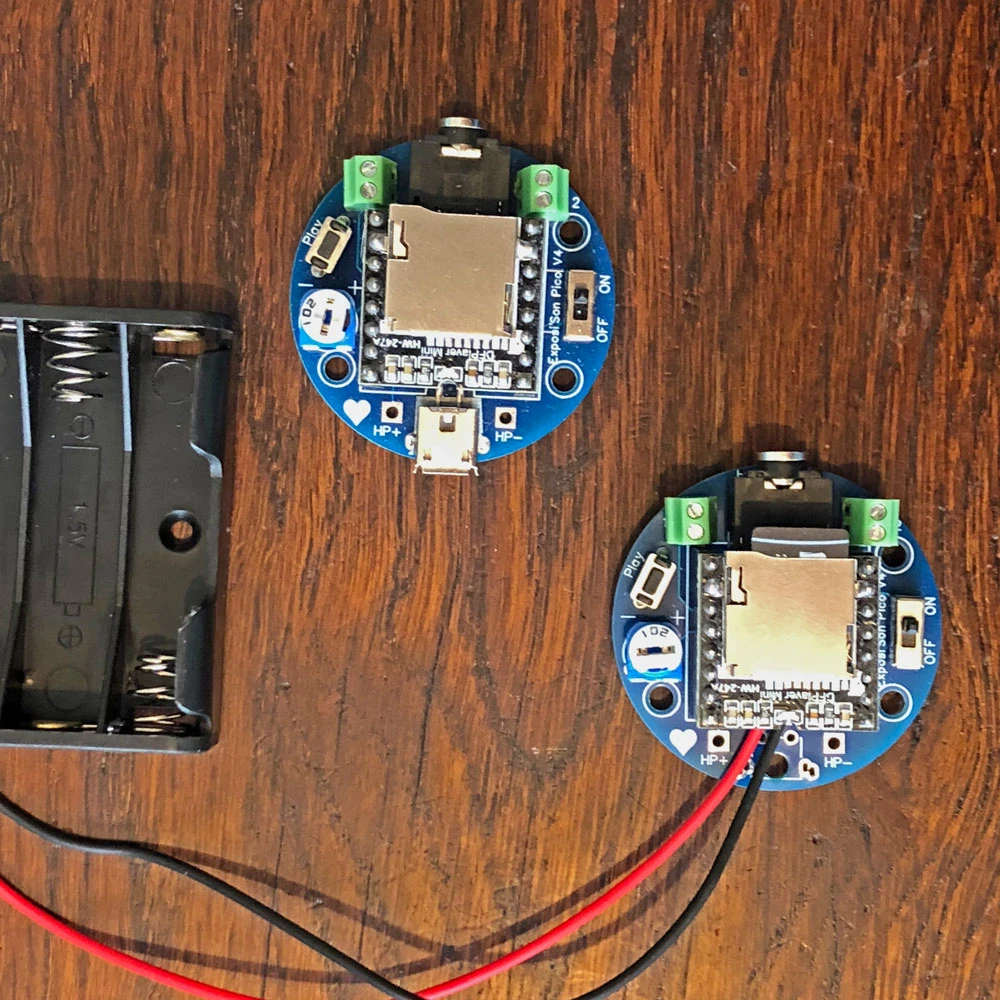
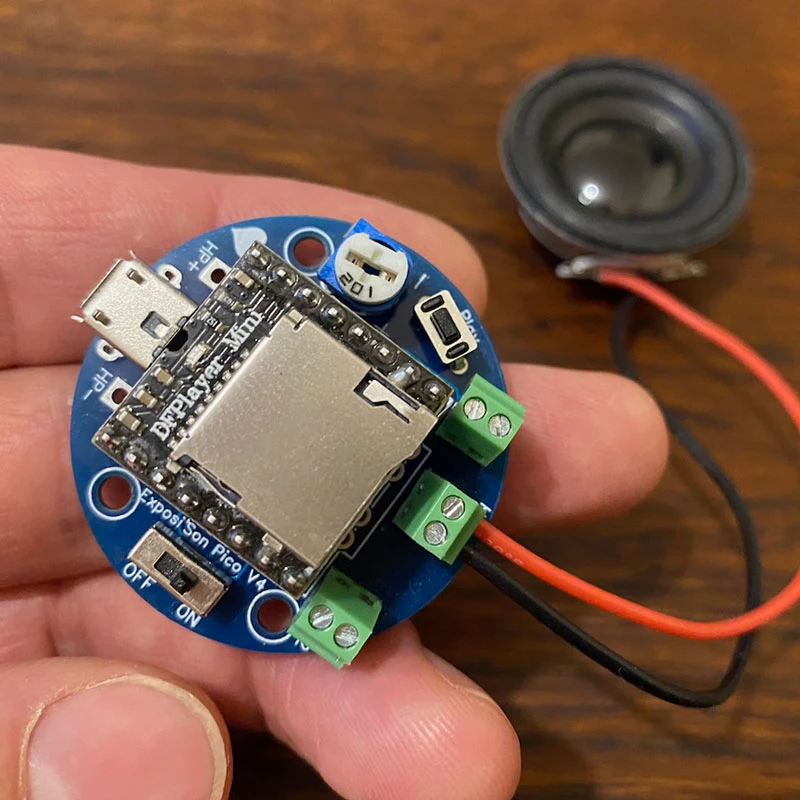
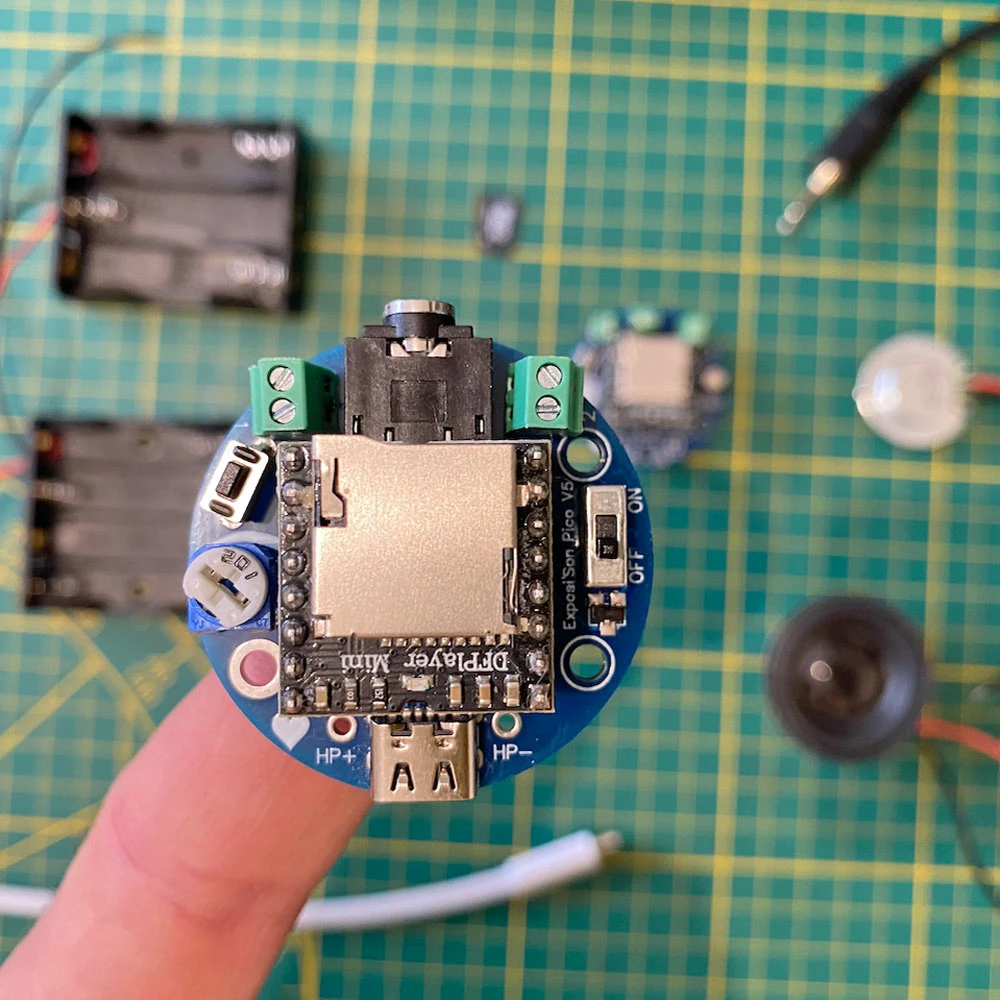

The Exposi'Son is a standalone audio player that plays, in mono, the sounds stored on a microSD card. It handles MP3 and WAV files. Designed and handmade by me, it is meant for projects such as listening stations, sound installations, exhibitions and museum displays, stage design, interactive objects, model making, and so on.
If technical things are not your cup of tea, contact me and tell me about your project: I will take care of everything. Or answer a few questions and the steps write themselves.
Simple use
- Play button (short press): plays file 1, once.
- Play button (long press): plays file 1 on an endless loop.
- Hold Play while powering up (or bridge AdKey1 with a wire): plays every file in order, on an endless loop.
And with my Exten'Son, you can connect up to 14 buttons, each one playing its own sound.
Choosing your version
Audio output:
- Jack: unamplified output for headphones, a powered speaker or an external amplifier.
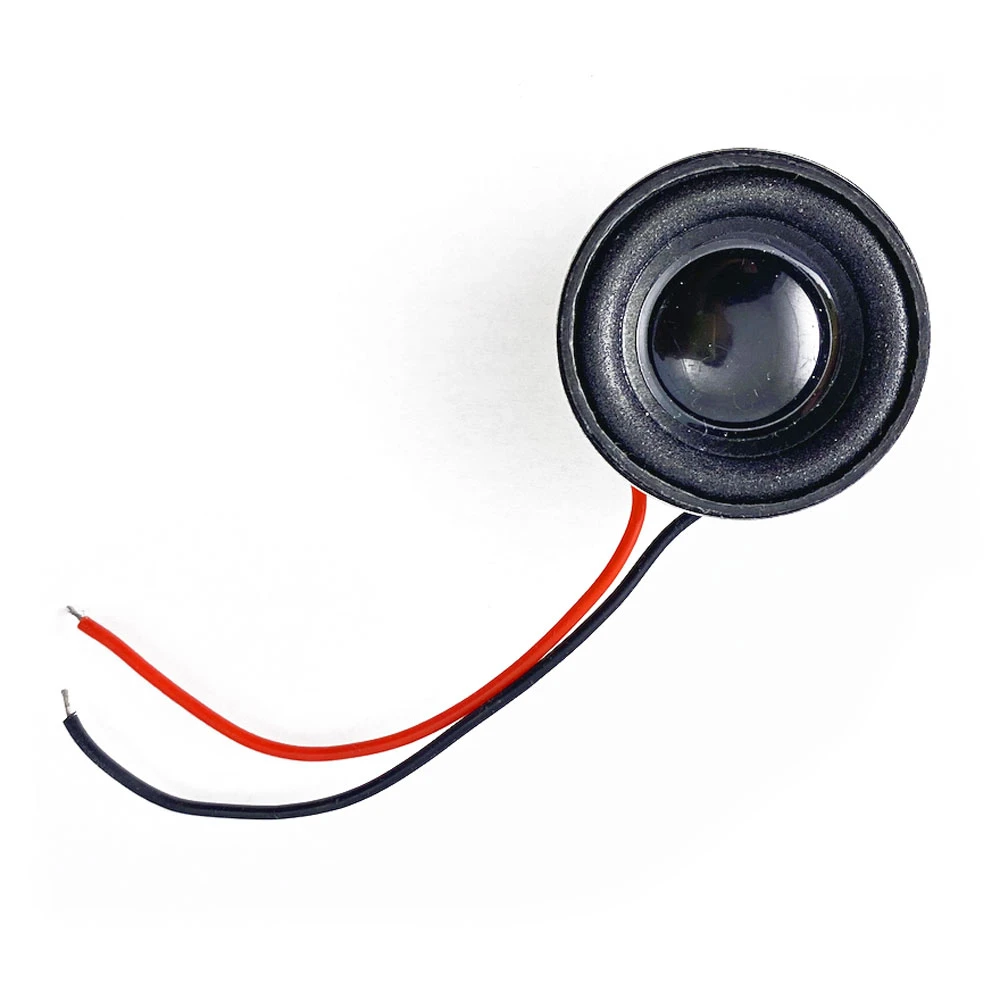
- 3 W speaker (included): the easiest to set up.
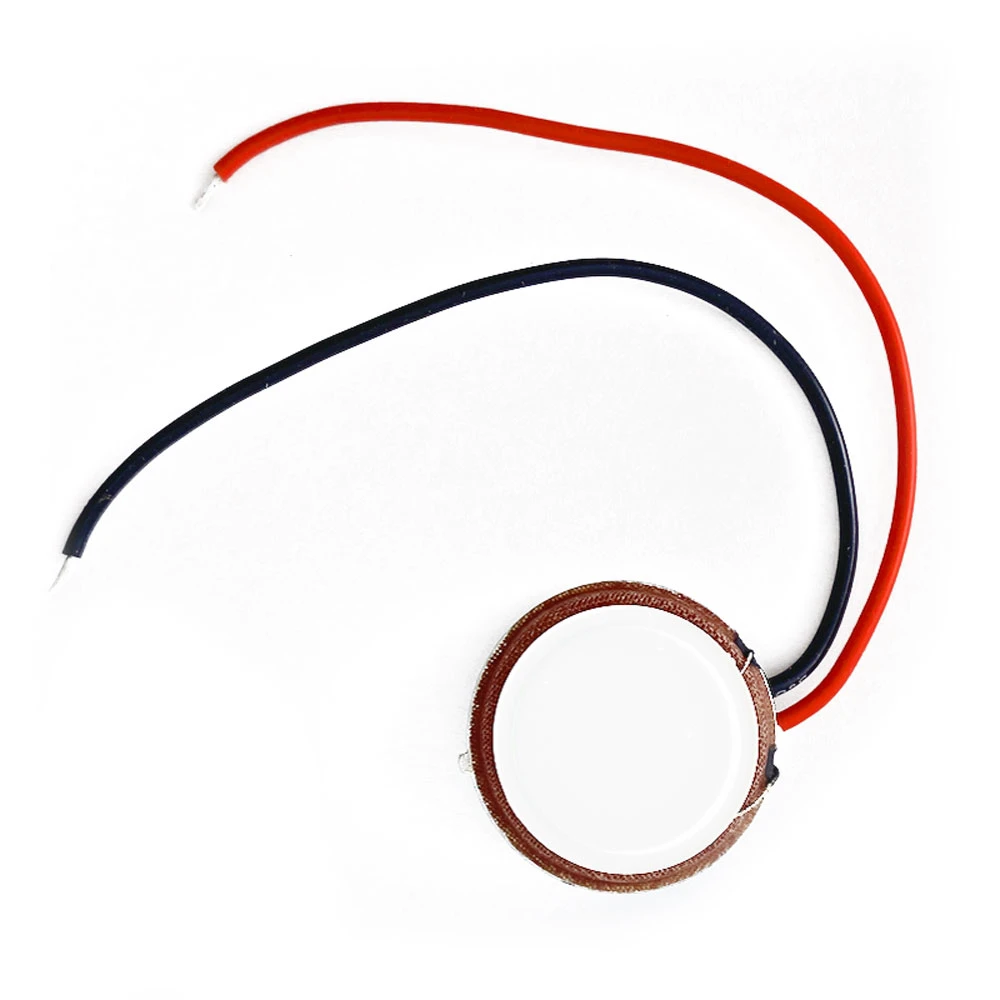
- 3 W resonator (included): glued onto a rigid surface (wood, glass, thick cardboard…) which becomes the membrane.
Power supply:
- USB-C (recommended): from the mains or a power bank.
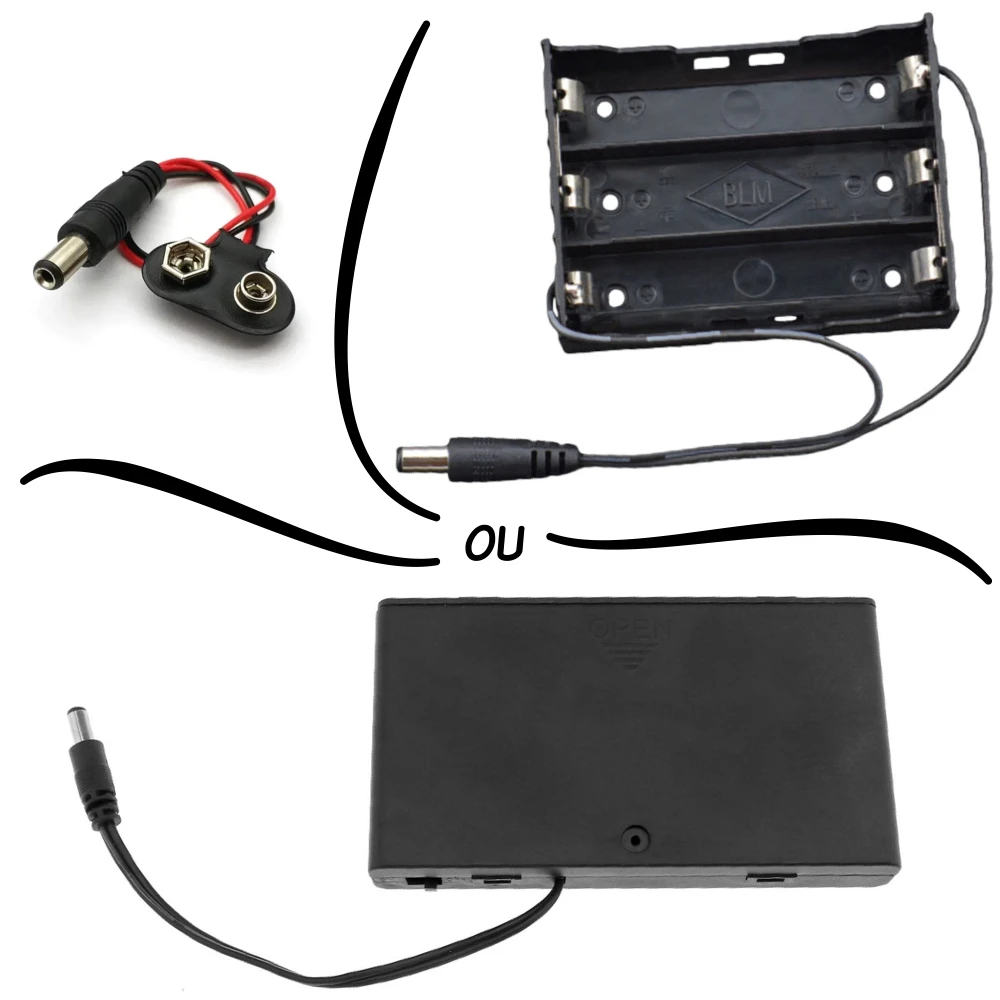
- Battery box: 4 × AA, 4 × AAA, or one 18650 battery, for a wireless installation.
Need random playback, stereo, more than 14 buttons or lights? Have a look at the Ambi'Son, or let me guide you to choose.
Wiring, settings and tips: read the full user manual.
Museum, local authority or company: quotes and invoices on request.
Additional information
They did it with an Exposi'Son
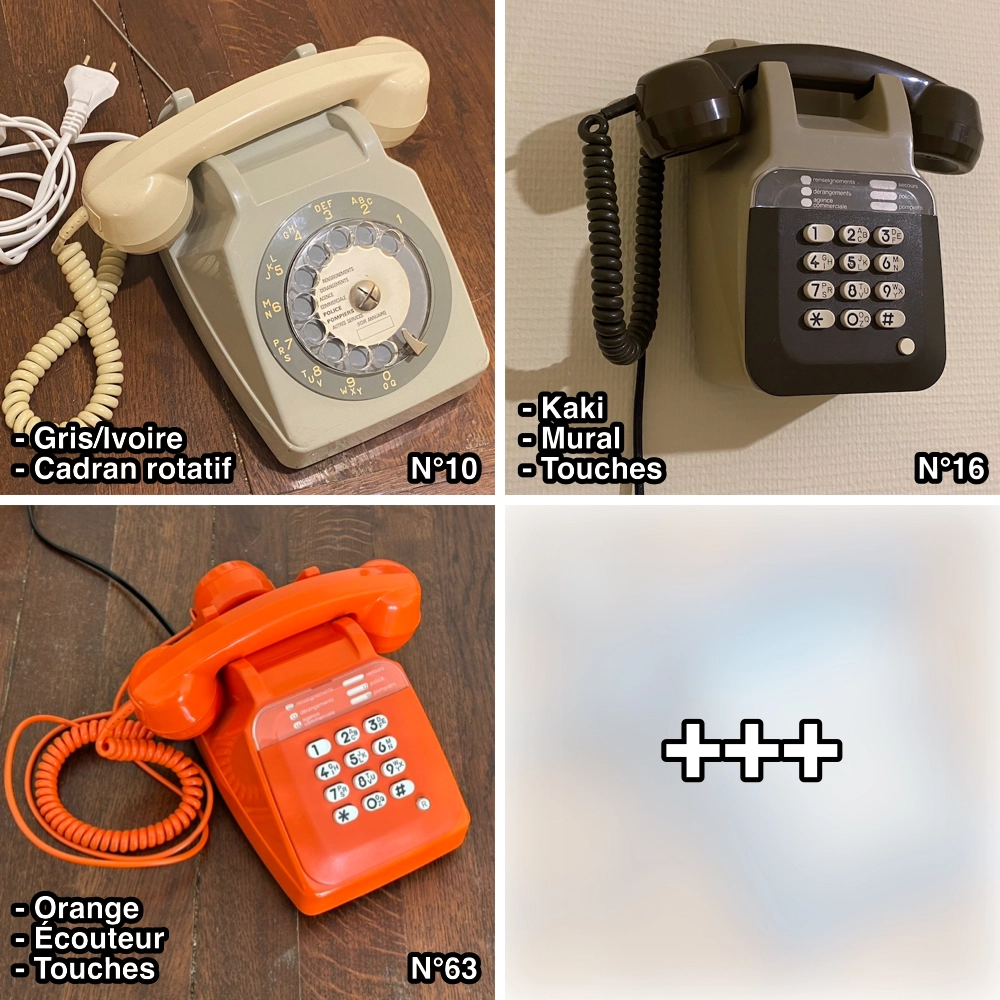
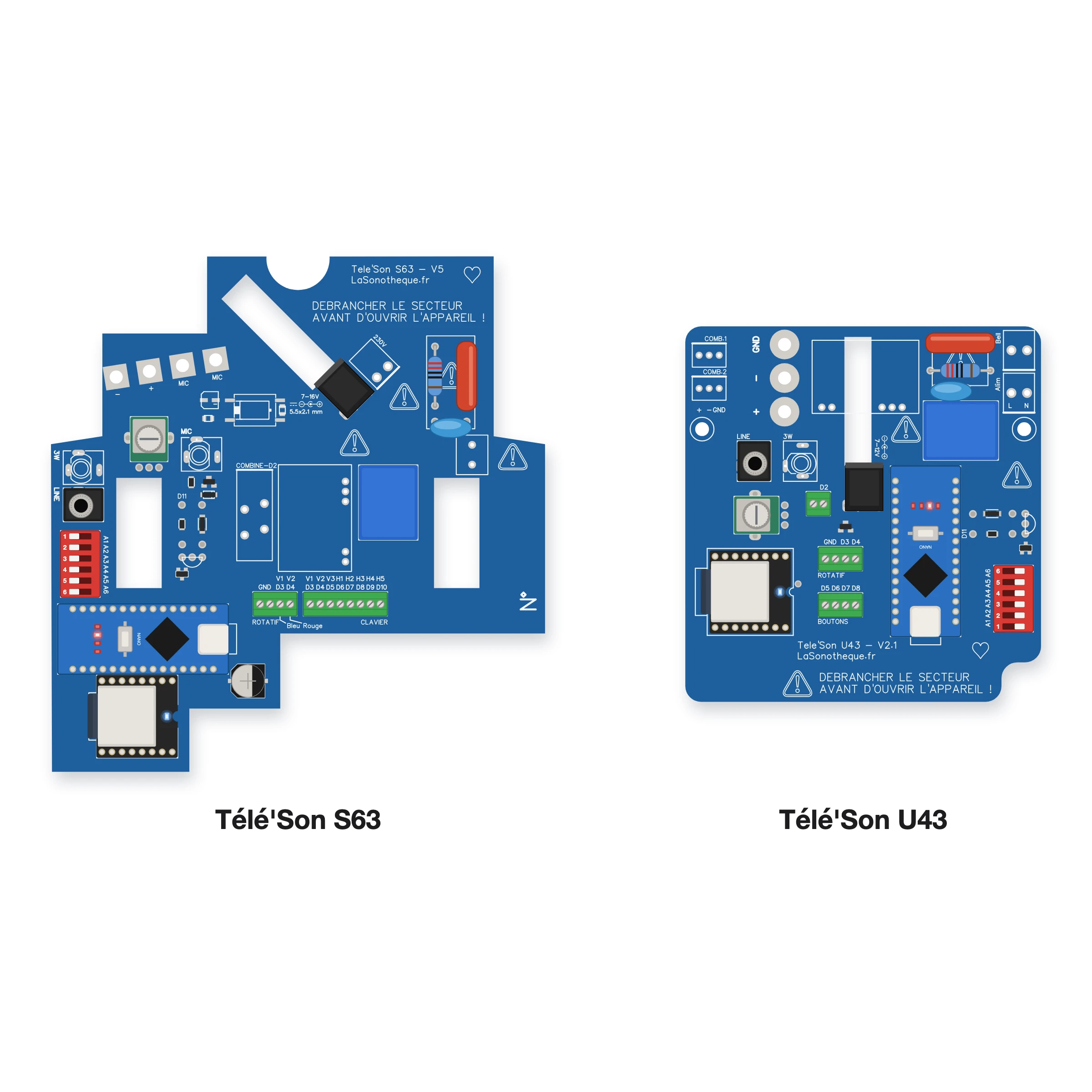
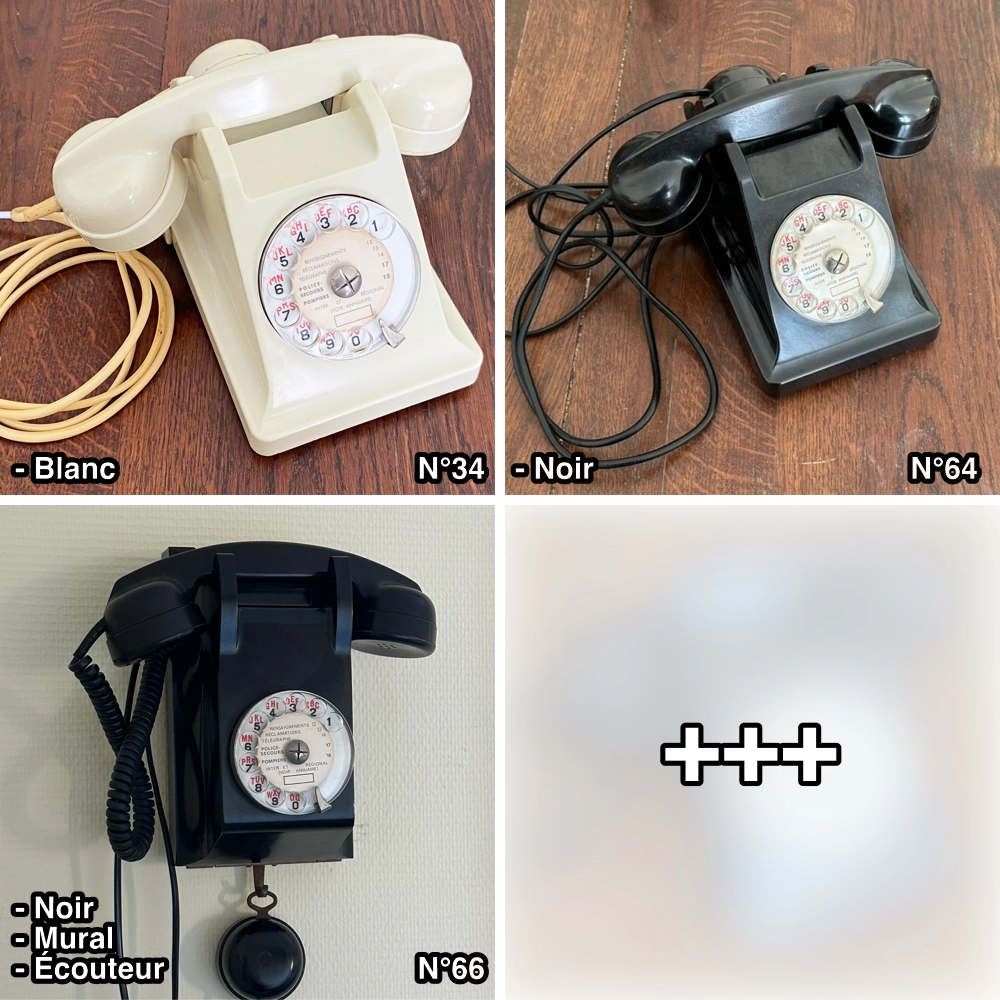
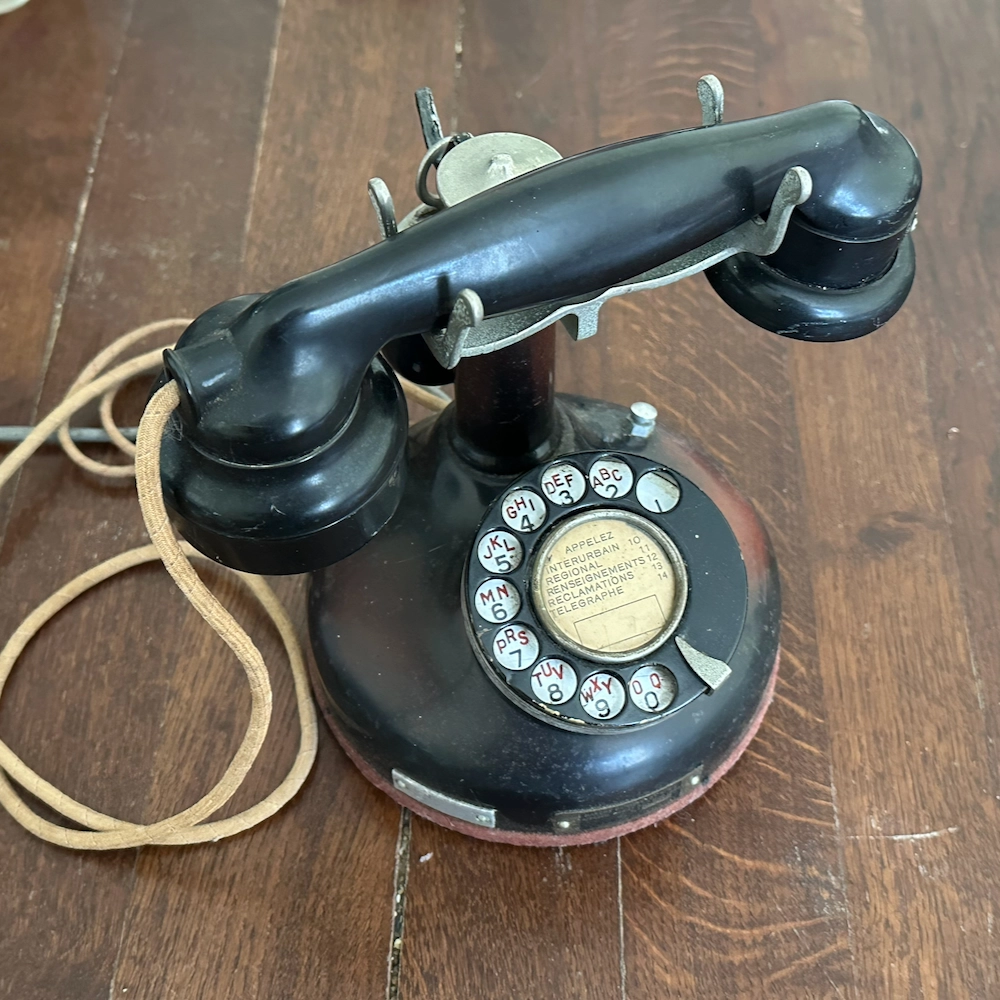
- A listening station built into a vintage Socotel S63 or U43 telephone, at low cost
- An audio kiosk with 1 to 4 headphones and up to 14 buttons
- An electronic "moo box"
- My "real waterfall"
- A sound sign for a museum or gallery
- A user's sound sign
- A sound night light
- Adding sound to a work of art
- And billions of other things…
All kinds of projects are possible. Need advice (feasibility, choice of version, building…)? Contact me. And if you would like to tinker with my help, I welcome you in my workshop.
Exposi'Son or Ambi'Son?
| Exposi'Son | Ambi'Son | |
|---|---|---|
| Sounds triggered by a button | Up to 14, with Exten'Son boards. | Up to 20 with Exten'Son boards, and up to 128 with Expan'Son boards. |
| Playback order | In file order. | In order or at random, as you choose. |
| Audio output | Mono. Unamplified 3.5 mm jack, 3 W speaker or resonator, chosen when you order. | Stereo on the jack, or 3 W amplified mono on screw terminals, chosen with a switch. Optional Bluetooth. |
| Lights, relays, sensors | No: it only plays sounds. | Yes, through the Nano's D6 to D12 pins, or with Expan'Son boards. Requires programming the Nano. |
| Programmable | No: its behaviour is fixed. | Yes, through its Nano, an Arduino clone. Reprogrammable at will. |
| Power supply | USB-C, or 3.2 to 5 V: AA or AAA batteries, or an 18650 battery. | 5.5 × 2.1 mm DC plug or screw terminals, 7 to 16 V. Or the Nano's USB-C (not recommended). |
| Best suited to | Temporary or travelling installations, or hiding inside a small object. | Permanent installations, and any project that has to react to its audience. |
Museums, local authorities and businesses
I provide quotes and invoices on request, with submission through Chorus Pro for French public bodies, and payment by bank transfer (VAT not applicable, article 293 B of the French General Tax Code). As each module is made by hand, write to me for a bulk order: we will agree on the lead time together.
Protection
The module is sold bare, without a case. It must therefore be kept away from anything conductive, including the metal of a speaker: risk of short circuit and destruction of the module. This applies to all boards of this kind: Bare Conductive's "Touch Board", the "Teensy Audio Shield", Adafruit's "Audio FX Sound Board"…
To house it, see the enclosures and cases made for this board, to 3D print or build yourself, with their source files.
Power supply
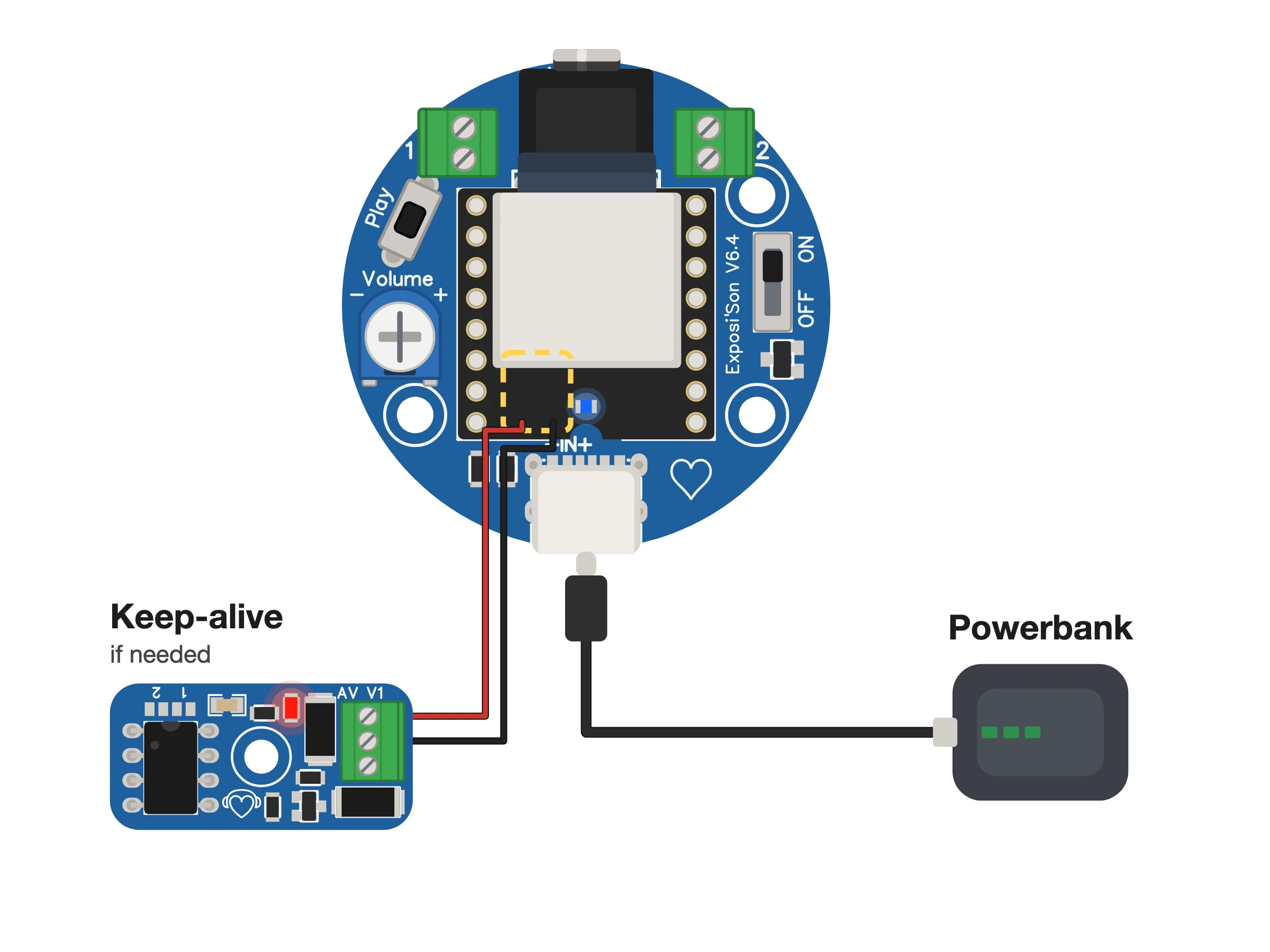
The module runs on 3.2 to 5 V, but 5 V is recommended to get the maximum audio power. I recommend USB-C: from the mains with a USB-C adapter, or from a power bank. Otherwise, choose rechargeable batteries: for ecological and economic reasons, I never recommend alkaline batteries, which are cheaper but disposable.
On a power bank, watch out for standby. The Exposi'Son draws very little current (27 mA when idle, 35 mA with headphones). Yet most power banks switch their output off when the connected device draws too little: the module then stops without warning, after a few seconds or a few minutes, especially with headphones, at low volume or between two playbacks.
- Got time? First test your power bank on its own, in real conditions: same audio output, same volume, and leave the module idle for a good while. If it does not cut out, you are all set.
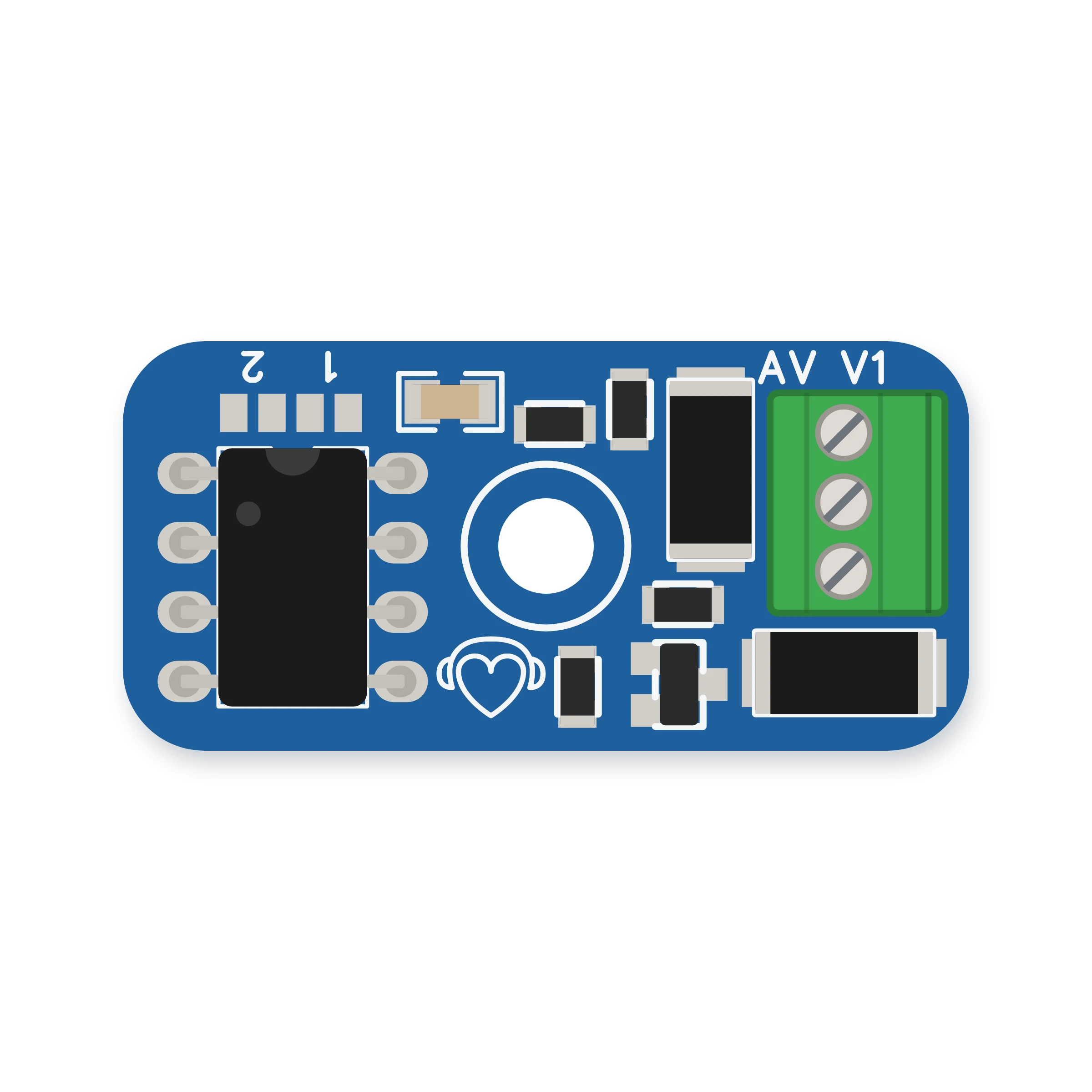
- No time to test, or nothing must stop? Add a keep-alive: it keeps the power bank switched on, with no setting at all.
Some power banks offer an "Always-on" or "low current" mode (designed for connected devices): if yours has one, turn it on, it may be enough.
Speaker or resonator?
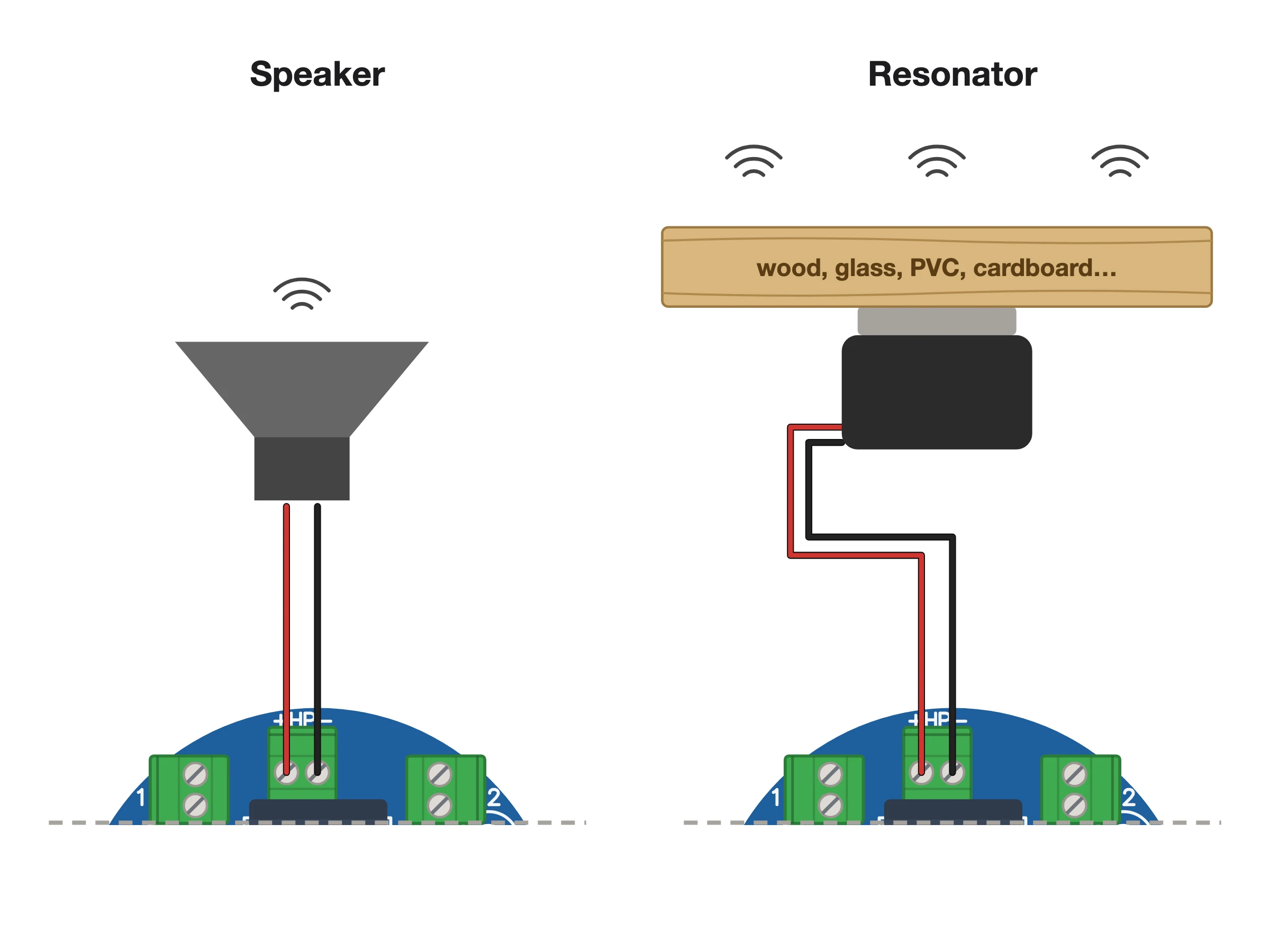
A resonator is a speaker without a cone: you glue it onto a solid surface (glass, wood, cardboard, plastic…) which it makes vibrate, and that surface spreads the sound. The ideal way to make sound heard without showing a speaker.
Connecting an amplifier
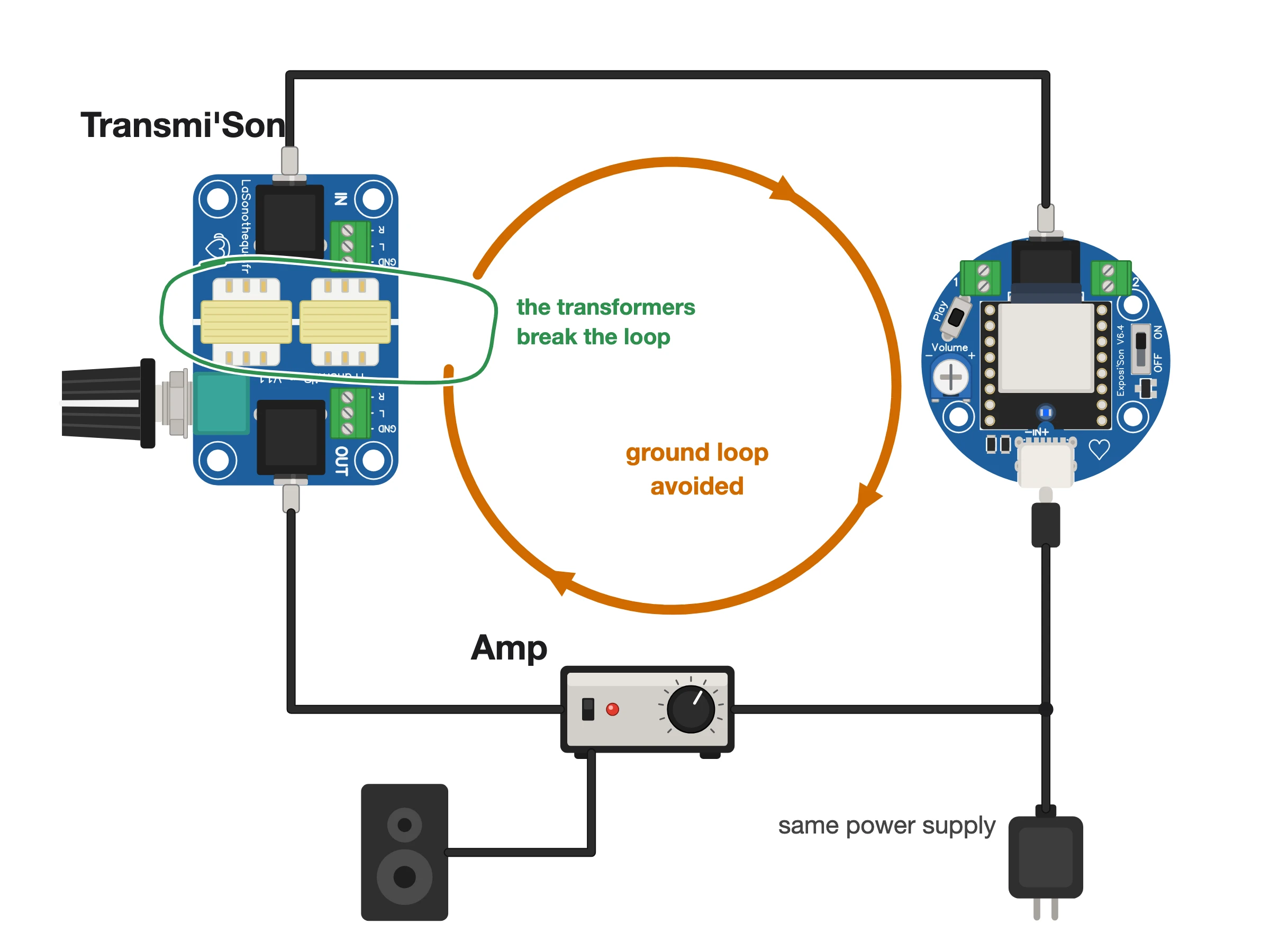
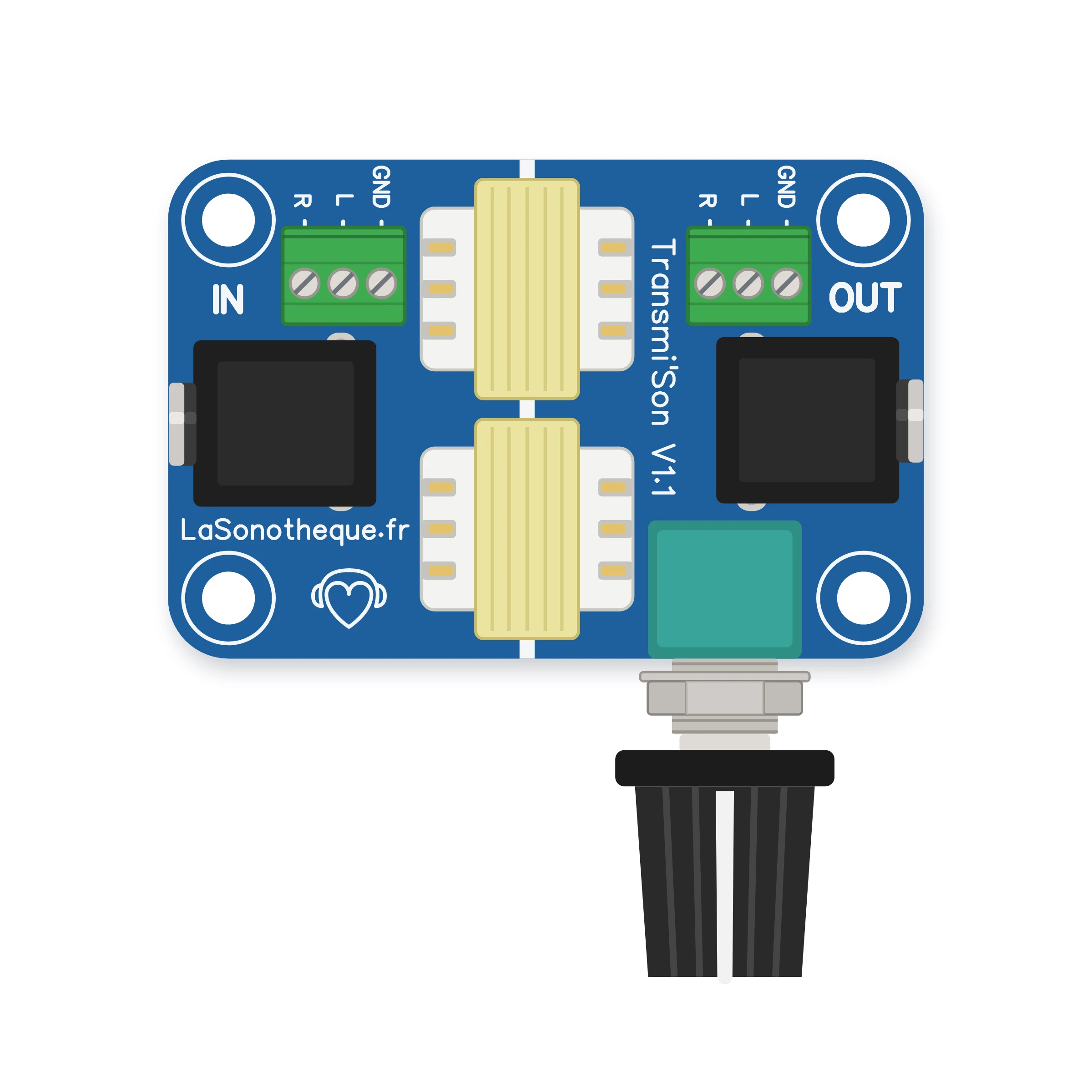
In the jack version, you can connect the Exposi'Son to an external amplifier. If the module and the amplifier share the same power supply, a hum almost always appears: add a Transmi'Son in between, which removes it and also lets you control the amplifier's volume.
Adding buttons
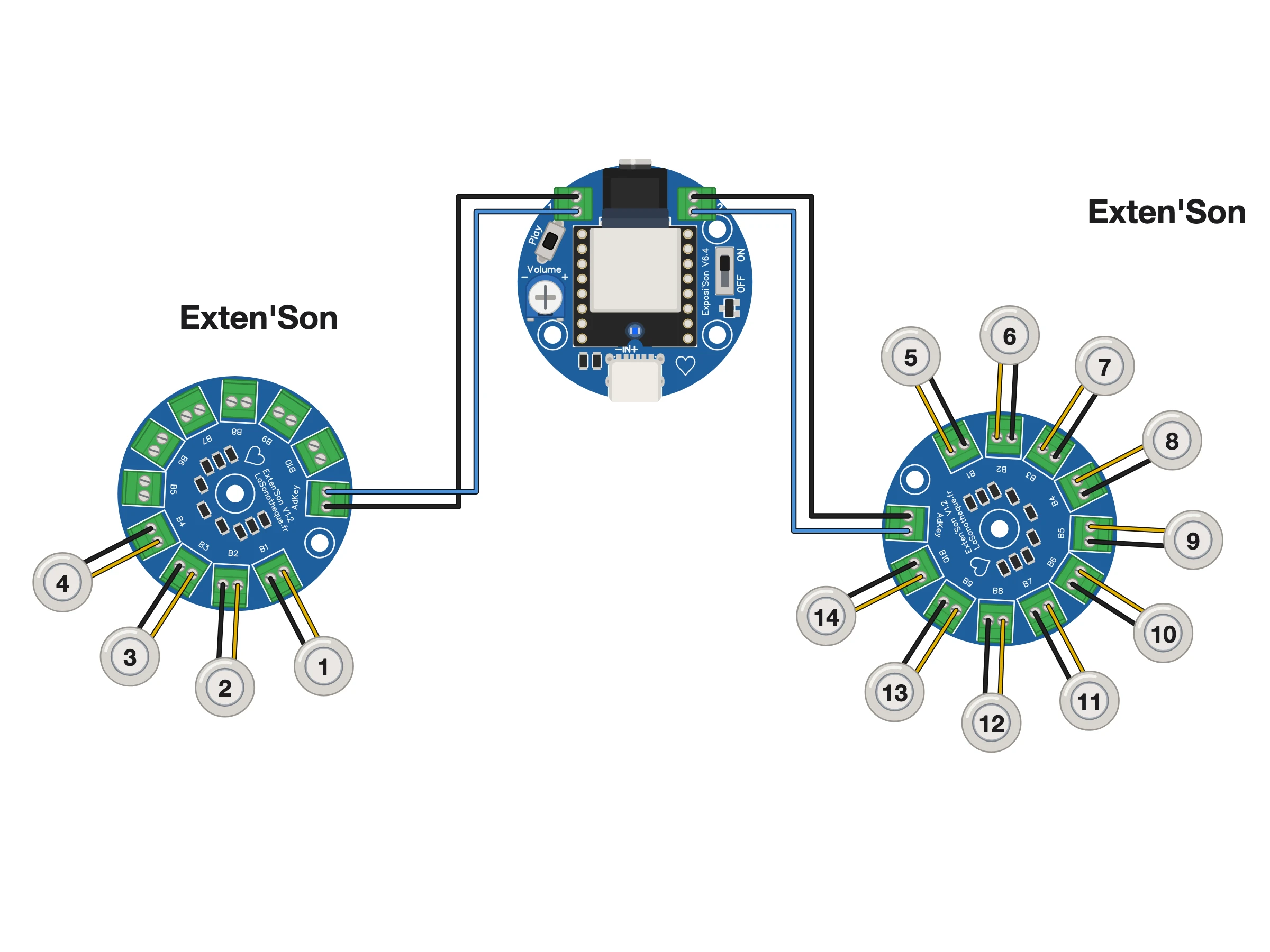
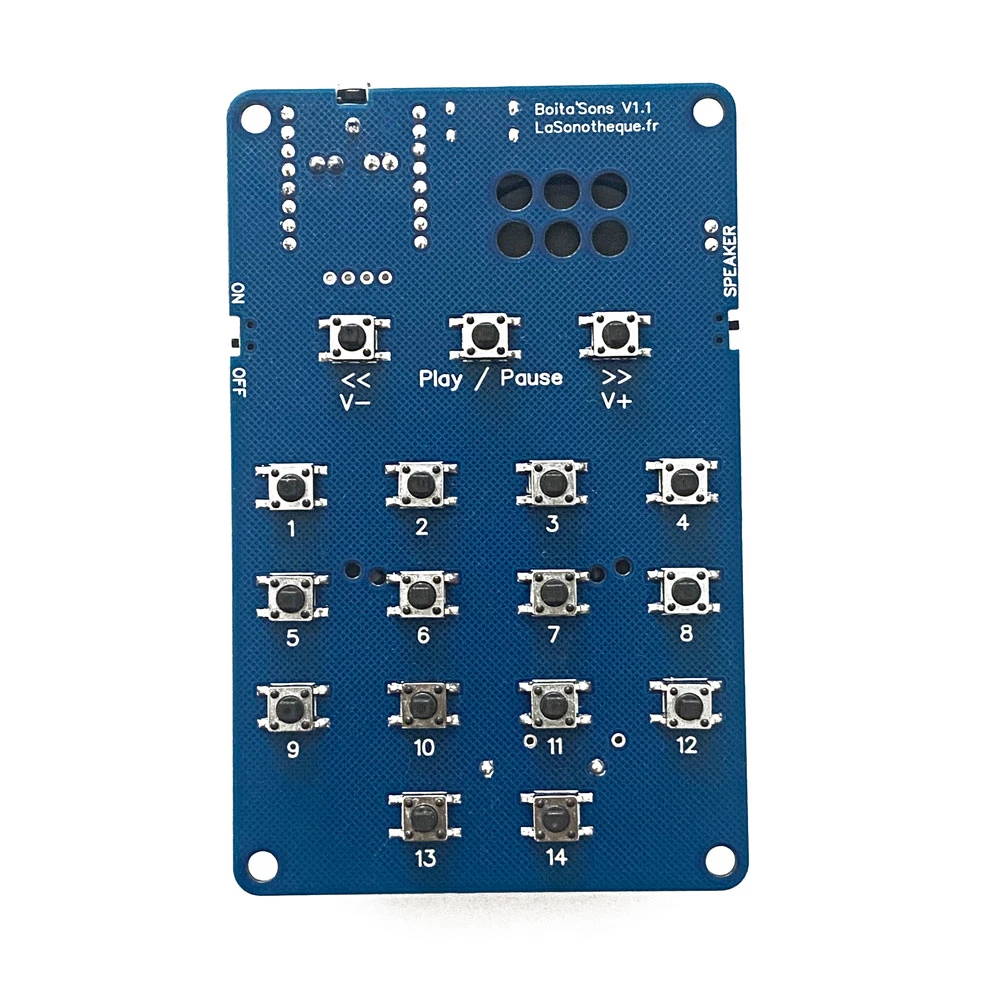
The module has two screw terminals marked "1" and "2" on the board: these are the AdKey1 and AdKey2 inputs. You can connect many push buttons to them, up to 14. To make things simple, I created the Exten'Son, which lets you build this setup without any particular knowledge. If you would rather do it yourself, everything is in the user manual.
How many boards, on which terminal, and which button plays which file? Tell me how many sounds you want and the wiring table builds itself, station by station. And if you prefer, I will wire the buttons for you.
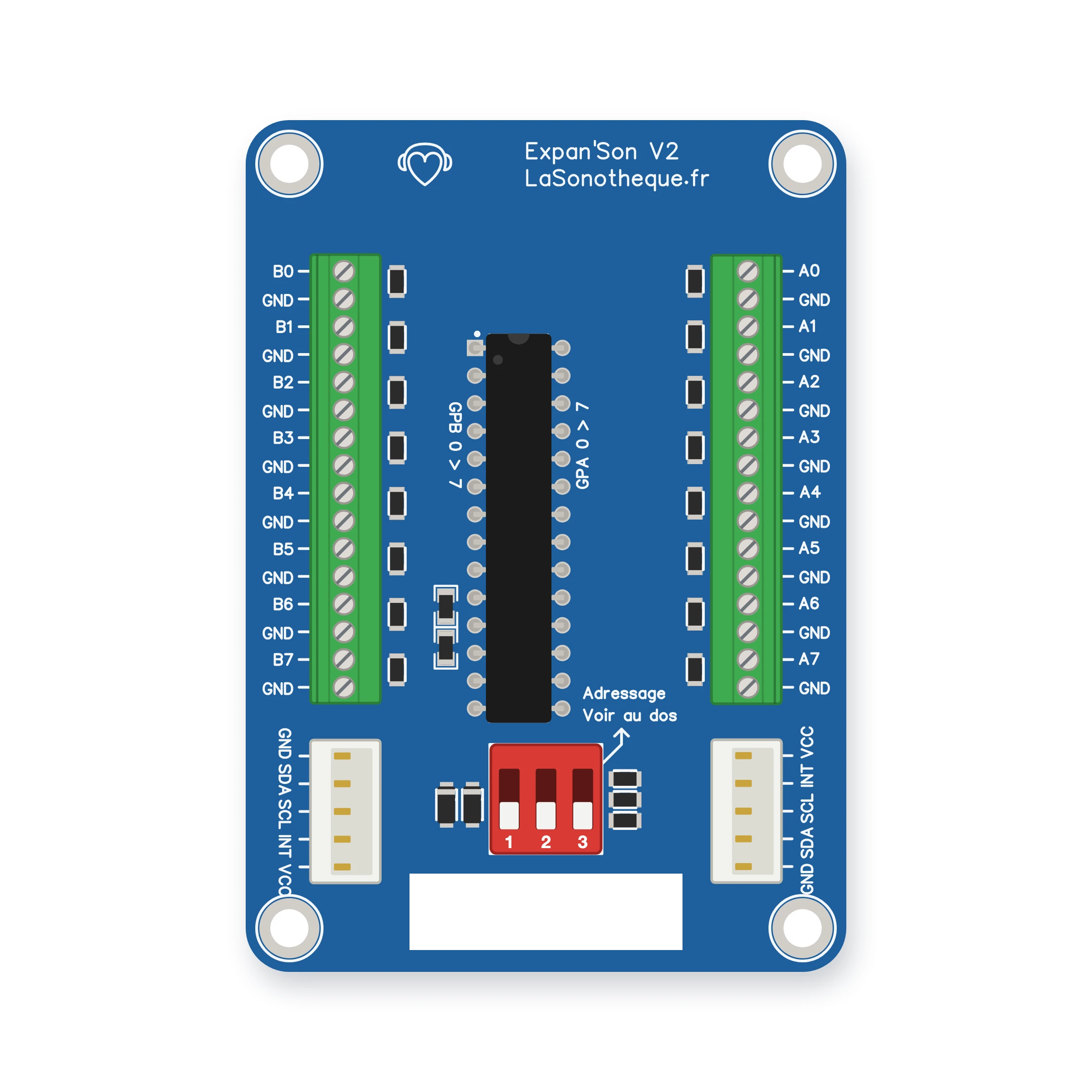
However, the Expan'Son is not compatible with the Exposi'Son: it is controlled through the I2C bus, which requires a microcontroller. To go beyond 14 buttons, or to control LEDs, relays or other devices, choose the Ambi'Son.
Technical specifications
- Choose your version and set it up, in a few questions
- Full user manual
- Power supply, your choice:
- USB-C, recommended: from the mains (adapter and cable sold separately) or from a power bank (keep-alive recommended, see "Power supply")
- Box for 4 AA or AAA rechargeable or disposable batteries (not included)
- Box for one 18650 battery (not included)
- Battery life (estimate):
- USB-C: unlimited on the mains, depends on its capacity on a power bank
- Rechargeable batteries: about 18 to 65 h on the jack output, about 2 to 6 h on the 3 W speaker or resonator output
- Alkaline batteries: about 23 to 57 h on the jack output, about 2 to 5 h on the 3 W speaker or resonator output
- 18650 battery: about 69 h on the jack output, about 6 h on the 3 W speaker or resonator output
- Power consumption (measured at 5 V, white noise, maximum volume):
- Idle: 27 mA
- Jack output, with headphones: 35 mA
- 3 W speaker or resonator (4 Ω): about 390 mA
- Audio player: genuine DFPlayer Mini by DFRobot
- Storage: microSD card (sold separately), up to 32 GB, formatted in FAT16 or FAT32
- Formats: .mp3 (preferably) and/or .wav (48 kHz / 16-bit maximum)
- Channels: mono (left and right mixed)
- Playback, with the push button:
- All files in order, looped
- The first file, once
- The first file, looped
- Audio outputs, chosen when you order:
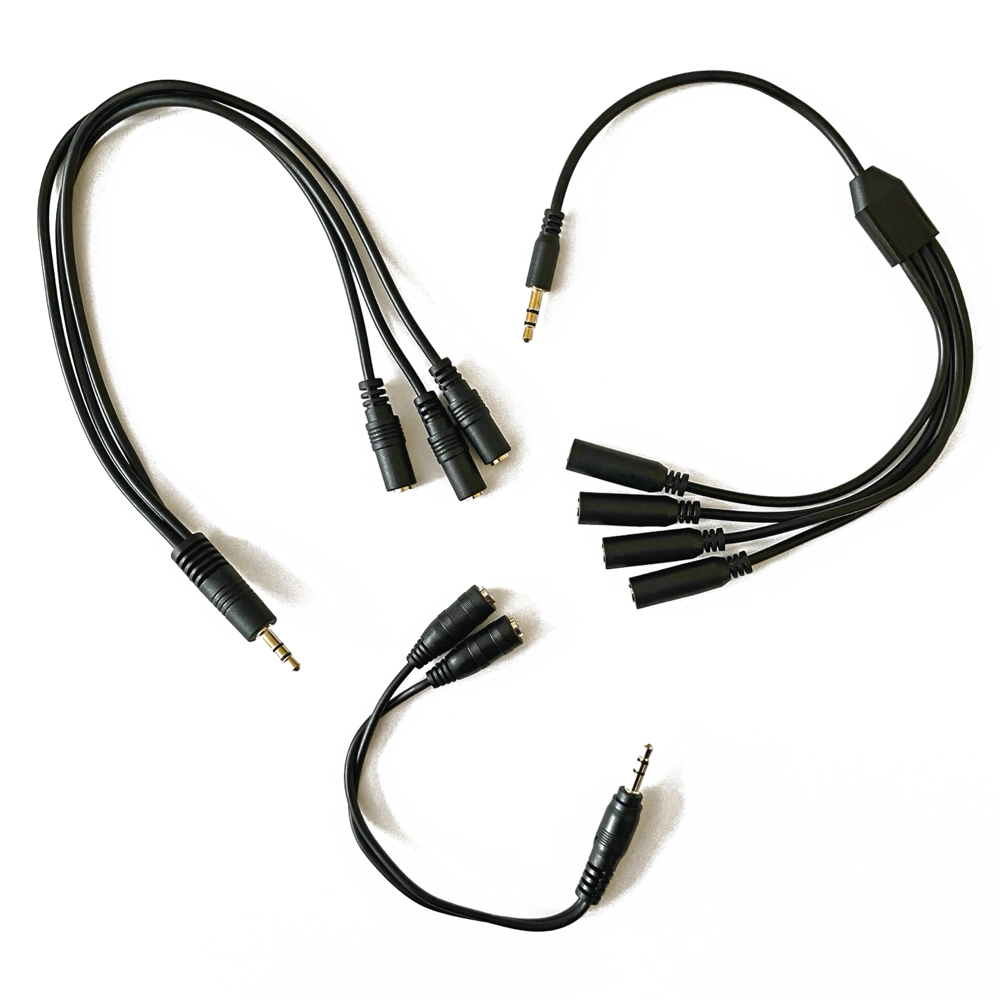
- 3.5 mm jack, unamplified (DAC output): for 1 pair of headphones (like this one, this one, that or that), up to 4 headphones with a splitter, or an amplifier (with a Transmi'Son if the power supply is shared)
- 3 W speaker (included), amplified, into 4 Ω
- 3 W resonator (included), amplified, into 4 Ω
- Volume: analog, adjustable with a screwdriver
- Dimensions: 40 mm in diameter, 20 mm thick. Drilling details: see the last image.
- Sensitive to humidity and rain: for indoor use, or protected.
- Designed and handmade by me, from drawing the circuit board to soldering the components.
Not included
Essential to get started:
- microSD card, to hold your sounds
- A power supply: USB-C adapter and cable for the mains, a power bank, or AA, AAA or 18650 rechargeable batteries, depending on the version
- In the jack version: something to listen with (headphones, powered speaker or amplifier)
Depending on your project:
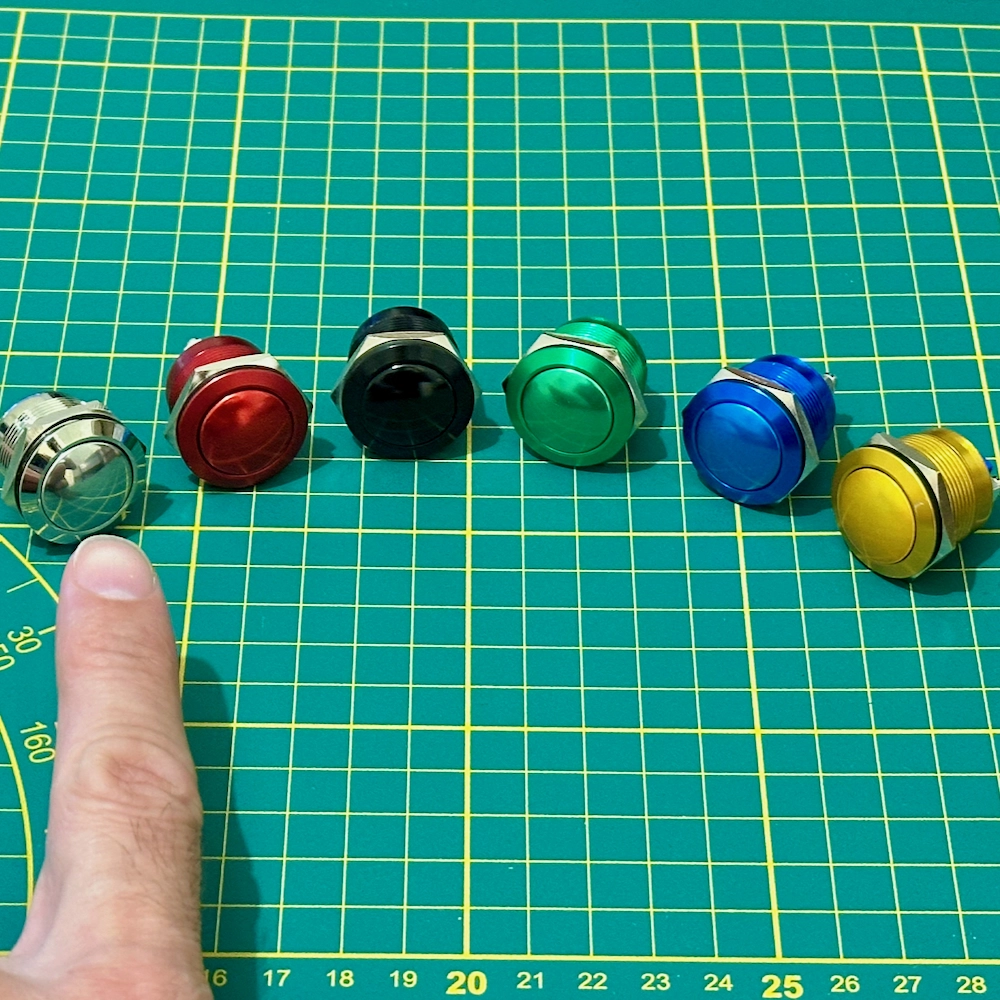
- Push buttons, to trigger your sounds
- Exten'Son, to add buttons easily, on the AdKey inputs
- Jack splitter, to connect up to 4 headphones
- Transmi'Son, to connect an external amplifier without hum when it shares the module's power supply, and/or to control its volume
- Keep-alive, to stop a power bank from going into standby
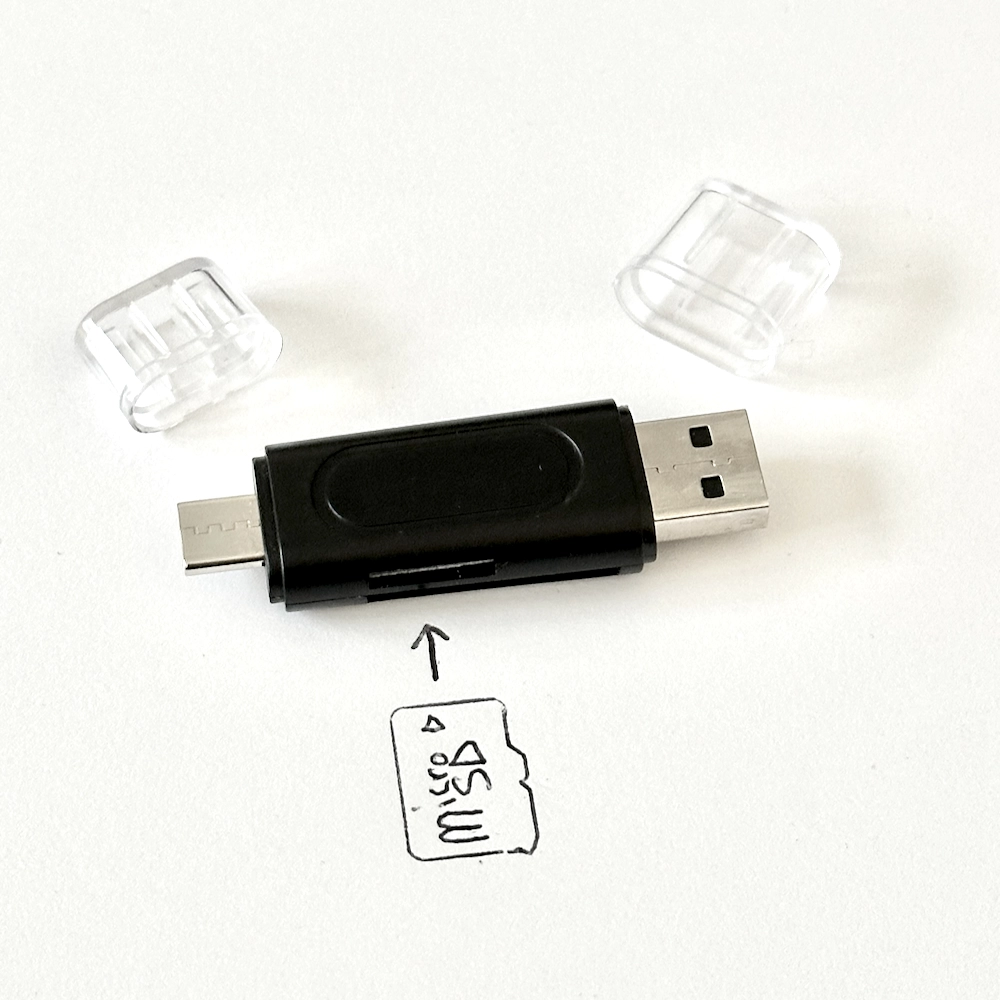
- USB microSD card reader, if your computer does not have one
- Enclosure, to protect the module
Photos, videos, components, colours, version, etc.: non-contractual.
Standards and recycling
Frequently asked questions
How is it different from the Ambi'Son?
The Exposi'Son is simpler, smaller and more affordable: it plays in mono, from a microSD card, and also runs on rechargeable or disposable batteries. The Ambi'Son is stereo, plays at random without repeats, accepts a USB key or optional Bluetooth, handles up to 128 buttons with Expan'Son boards and can be reprogrammed. For a simple listening station, the Exposi'Son is enough.
How many buttons and headphones can I connect?
Up to 14 push buttons, on the two terminals AdKey1 and AdKey2, most simply with the Exten'Son. For listening, the jack version takes 1 to 4 headphones with a splitter.
How do I power it and which audio output should I choose?
The simplest: USB-C, from the mains with an adapter, or from a power bank. Its 5 V gives the full 3 W output. Battery boxes also exist, for a wireless installation. On a power bank, the Exposi'Son draws so little that the power bank may go into standby: if you have time, test it in real conditions, otherwise add a keep-alive. For sound, three choices: jack (headphones, powered speaker or amplifier), 3 W speaker, or 3 W resonator, which turns a surface into a membrane, with no visible speaker.
How do I change the sounds?
With the module unplugged, take out the microSD card, replace the files from a computer, then put the card back. If your computer has no card reader, a USB reader will do.
Can I order several for a museum or a local authority?
Yes. I provide quotes and invoices on request, with submission through Chorus Pro for French public bodies, and payment by bank transfer. As each module is made by hand, write to me to agree on the lead time for your quantity.
Ratings
- Rated 9.5/10 (average) - 8 Reviews
Comments
Be the first to give an opinion!
Rate & Comment
Other interesting articles
 Best seller Staff pick
15,00 €
In stock
 Best seller
From 39,00 €
In stock
25,00 €
In stock
From 10,00 €
In stock
20,00 €
In stock
From 225,00 €
In stock
From 100,00 €
In stock
From 250,00 €
In stock
 Staff pick
From 12,00 €
In stock
 Staff pick
From 5,00 €
In stock

45,00 €
In stock
12,00 €
In stock
350,00 €
Out of stock
From 30,00 €
Out of stock
Accessories
 Best seller
From 12,00 €
In stock
 Best seller
15,00 €
In stock
 Best seller
12,00 €
In stock
From 9,00 €
In stock
5,90 €
In stock
From 7,00 €
In stock
From 5,50 €
In stock
18,00 €
In stock
8,00 €
In stock
5,00 €
In stock
15,00 €
In stock
From 5,00 €
In stock
10,00 €
In stock
From 5,50 €
In stock
From 5,00 €
In stock
From 10,00 €
In stock
10,00 €
In stock